
When my daughter transitioned from homeschool to public high school, I was the one falling apart — not her.
We were at the bus stop before anyone else arrived. Not a single car in sight. My fifteen-year-old stood there, backpack on, looking entirely unbothered. Meanwhile, I was quietly processing the fact that this was her first day of school — ever.
After years of homeschooling, she had made a choice: she wanted to try public high school. And honestly? I was the nervous one.
If you’re a mom whose child has transitioned from homeschool to public high school — or is thinking about it — this is for you. Because there’s so much no one tells you about what this transition actually feels like, for both of you.
Why Homeschooled Teens Sometimes Choose to Transition to Public High School
The day before, I’d asked her how she felt about starting school. Her answer: “Nothing. It’s just school. Not exciting.”
Not exciting. Then why go?
That question sat with me. We had built something beautiful in our homeschool — personalized learning, real-world experiences, flexible schedules, travel, cooking, part-time work, and academic courses far beyond her grade level. Why trade that for a classroom?
But here’s what I had to remind myself: it was her choice to make. Not mine.
She had grown up with the freedom to learn her own way. And now, she was exercising that very same freedom to experience the world outside our homeschool family. I couldn’t be upset about that — even if I was a little heartbroken.

Signs Your Homeschooled Teen Might Be Ready for This Transition
Every kid’s readiness looks a little different, but a few things tend to show up when a homeschooler is genuinely ready to try public school rather than just curious about it:
- She’s asking specific questions about school — schedules, classes, friends — not just “what if,” but “what would.”
- She’s comfortable with structure and deadlines set by someone other than you.
- She’s expressed the desire more than once, in more than one mood.
- She has some experience navigating groups or authority figures outside your home (a co-op, a job, a team).
- She can articulate why she wants to go, even if the reason is small (“I want to know what it’s like”).
None of these are requirements — plenty of teens grow into readiness after they’ve already started. But they’re useful signs that this is her decision to make, not a whim to manage.
What I Wish Someone Had Told Me as a Homeschool Mom
Here’s what I’ve learned going through this transition (this is actually my third teenager — and second time entering public high school):
- Your worry is valid, but it’s probably not about the academics.
- The transition is harder on us than on them — usually.
- She’s not leaving your influence. She’s been bolstered by it. She’s expanding her world.
- The skills you gave her in homeschool don’t disappear when she walks through the school doors.
- Your homeschool identity doesn’t end when your child goes to public school. (That one was a shocker!)
Homeschooling gives children the freedom to take a scenic route along a dirt road. Sometimes, though, homeschooled teens want to experience a different dirt road. And our job as their moms is to trust the roots we’ve given them.
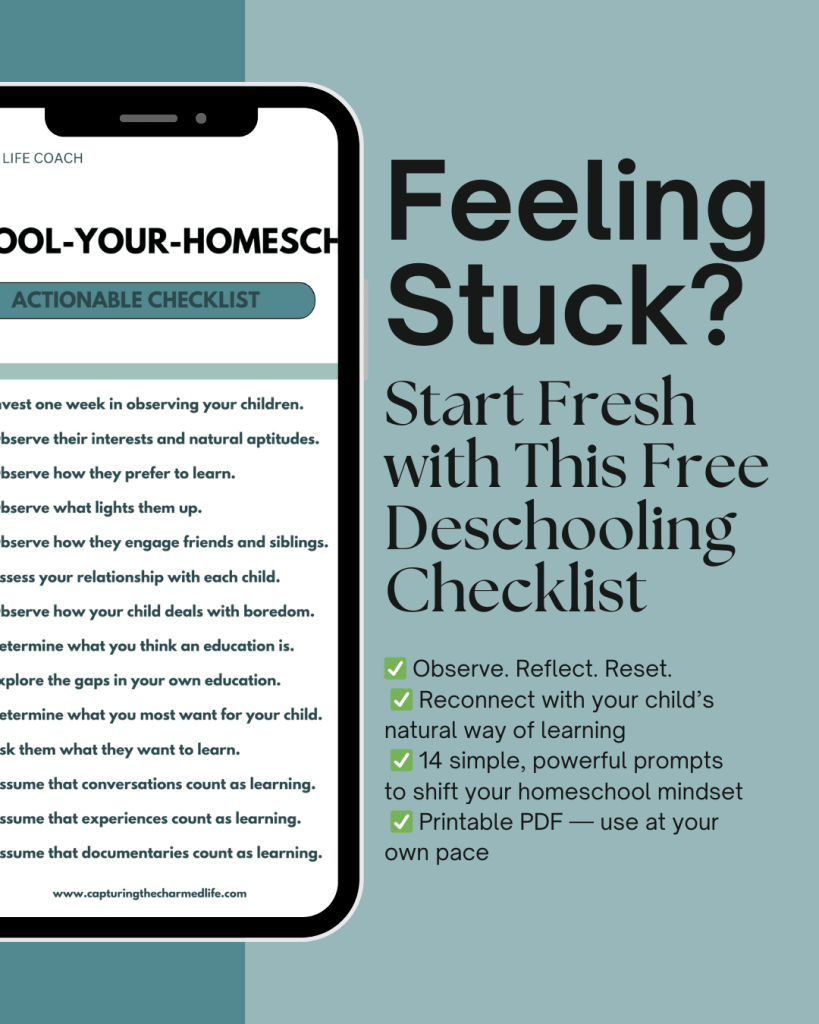
If you’re feeling stuck between structure and freedom, the Deschool Your Homeschool Checklist is your free reset button — a simple guide to help you let go of school-at-home thinking and build a homeschool that actually fits your child.
Is Full-Time the Only Option?
If a full switch feels like too big a leap — for you or for her — it doesn’t have to be all or nothing. Many districts allow homeschoolers to enroll part-time, take a single class at the local school, or dual-enroll in a community college course while continuing to homeschool the rest. This can be a good way to test the waters before committing to a full transition, and it’s worth asking your local school or district office what’s available before you assume it’s full-time or nothing.
The Stuff You Actually Need to Figure Out
Beyond the emotional side, there are real practical things that hit you when your homeschooler joins public school. Here’s what caught me off guard:
- You need to buy lunch containers. Real ones. Every. Single. Day.
- “Early morning” becomes a thing again — and if you’re like me, mornings are not your love language.
- Pick-up schedules, bus routes, house keys — the logistics of public school life are real.
- You’ll probably still be the one helping with homework, just now with a hard deadline attached.
- Transcripts, credits, and grades now have relevance for your kiddo — but you can still reframe how you approach them.
FAQ: Transitioned from Homeschool to Public High School
These are the questions I hear most from moms navigating this transition — or dreading it.
Most homeschooled students are academically well-prepared — often ahead of their peers because they’ve been enabled to think that learning matters. She will begin to recognize that the classroom is structured in a way that doesn’t deliver a customized education, and teacher/child rapport isn’t the school’s priority. You’ve prepared them to be a unique individual all the years previous to school. You’ll see quickly that they have a strong sense of themselves even in this place. Mama, you prepped them well!
That’s okay. Seriously. Let them try it, and let them know the door is open. Some kids are grateful for the school experience. Others realize why they would rather not continue the school experience. Either outcome is a win — because they learned something true about themselves. Keep the lines of communication open and inquire about their experience. Be curious through their eyes!
You’re used to being in the room. Aware of many details. Truth is, even if they’re homeschooling high school, they’re growing in their academic independence. You can continue checking in with them though. Start by building a rhythm: a 10-minute debrief at dinner, a weekly check-in on how things are going. You are forever their resource person. In fact, I’ve edited many a college English or history essay.
At least in the province of British Columbia, Canada, where I live, a child entering 10th grade, the school will typically build their transcript from that point forward. They won’t be asking for transcripts or your child’s portfolio previous to their high school program.
If you have a homeschool portfolio, hold onto them — they can complement the school transcript for college applications. Some colleges actively seek out former homeschoolers, especially those with strong extracurricular backgrounds.
The Social and Emotional Side of Transitioning
Every kiddo is different — but they always were, with or without school. In my own experience, I didn’t see any of my kids struggle to fit in socially beyond the normal adolescent concerns about, well, fitting in.
Here’s what I know, and you probably know it too: if your child has had a slew of relational experiences through your community, extracurriculars, co-ops, or just real life — they’ll do amazingly in a school setting as well.
That said, adolescence is adolescence. Some kids will need a conversation to work through social challenges — and that’s true with or without school. Welcome to teenagehood.
Homeschooled kids often have stronger social skills than people expect because they’re used to interacting with different ages and real-world situations. But you already know that.
Absolutely not. If anything, the fact that your child is transitioning from homeschool to public high school on her own terms means you succeeded. You raised a child who knows her own mind, values her own experience, and is brave enough to make a big choice. That’s not a homeschool failure — that’s the whole point.
You could choose an allegiance to home education that goes beyond your child. But I don’t recommend it. Isn’t the whole point enabling an education that serves your child? That’s your goal. You achieved it. Congratulations on a job well done.
Check in, not up. Ask open questions: “What was the best part of your day?” instead of “How were your grades?” Be the soft place she lands when things get hard, not the voice that adds pressure.
You’re Still a Homeschool Mom — Even If One Kid Goes to School
I still have one teenager at home. He’s remarkably academic, deeply curious, and thriving in our homeschool. And I drive his sister to the bus stop.
Both things are true. Both things are good.
Homeschooling is not a package deal. You get to customize it — by child, by season, by what each of them needs. And sometimes what one of them needs is something you can’t give them yourself.
And if you’re in a season of rethinking — not just what your homeschool looks like, but how you show up in it — that work starts with your own mindset.
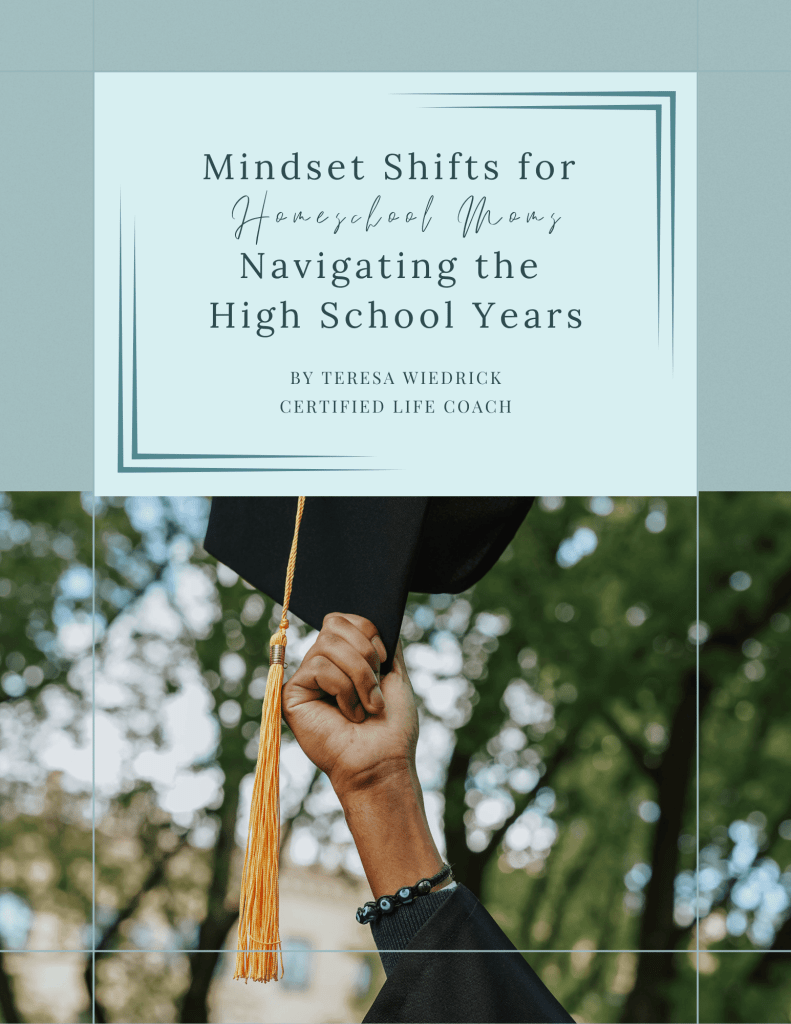
Mindset Shifts for Homeschool Moms: Thriving Through the High School Years
The high school years have a way of surfacing every doubt you’ve ever had about homeschooling. This workbook helps you move through them — with clarity, confidence, and a plan that actually fits your family.
That’s not a gap in your parenting. That’s wisdom.
Confidently Homeschool Through the High School Years $12.99 $10.99 Shop now →
Mindset Shifts for Homeschool Moms: Thriving Through the High School Years
Confidently Homeschool Through the High School Years
One Last Thing
That morning at the bus stop, I managed to say, “I hope it’s a great first day.”
She said, “Hmmm, sure.”
The bus came. She got on. I drove home in my robe.
And I realized: she was ready. She had always been ready. I was the one who needed to catch up.
If you’re in this season right now — dropped off at the bus stop, literally or figuratively — you’re not alone. And you haven’t lost anything. You’ve just entered a new chapter.
You raised her for exactly this.

Feeling unsteady about where your homeschool is headed?
Whether your teen just left for public school, is thinking about it, or you’re rethinking your whole approach — this 1:1 session helps you get clear on what’s working, what isn’t, and what your next chapter actually looks like.
This is not a curriculum consult. It’s a conversation that helps you lead your homeschool from a place of confidence, not anxiety.
Related Posts:
- Let’s Chat with Vicki Tillman of Homeschool High School Podcast
- How to Create a Personalized Homeschool High School (That Fits Your Teen)
- Fun with your Homeschool High Schoolers Teaching Literary Devices via Pop Culture
- A 2023 High School Graduate’s Thoughts on her Homeschool Life
- Transitioning into Homeschool High School: What We’re Really Talking About
- How to Set Realistic High School Expectations? Learn Human Development
- Why Homeschool High School is Better with Mary Hanna Wilson
- What are the benefits of a homeschool high school?
- What It’s Like: Homeschool to High School Transition
- Navigate Homeschool High School (What You Need to Know)
- Homeschool Teens Perspective: How to Homeschool High School
- How to unschool high school.
- Unexpected Feelings When Your Homeschooler Gets Accepted to University
- Advice for High School Homeschoolers with Vicki Tillman
- homeschool high school, grade 8 & 9: the churning
- Having a high school homeschooler at home.
- How to Facilitate Child-Led Learning in Your Homeschool
- Teaching literary devices to homeschool high school students using pop culture references
- Entering Homeschool High School
- High School Options & Post-Secondary School
- Wise Advice for High School Homeschoolers with Vicki Tillman
Book your free Aligned Homeschool Reset Session
I help homeschool moms trust themselves, edit expectations, and make intentional choices that create a more confident, connected, and present homeschool life.
Subscribe to the Confident Homeschool Mom podcast
Originally published October 12, 2020 — updated July 10, 2026
